At some point in a first color appointment in Forest City, the stylist will ask a question that can feel oddly personal: what is on your hair already, and when did you put it there? Box dye from two years ago counts. So does the dark color you grew out and assumed was gone. The question is not small talk and it is not a judgment. It is the difference between a color that lifts evenly and one that comes up orange in bands.
If you have never had salon color over old box dye, this walkthrough explains what actually happens, step by step, and why an honest history makes the appointment shorter, safer, and far more predictable.
Why old color never really leaves
Hair grows about half an inch a month. That means shoulder-length hair carries roughly two years of history at its ends. Permanent color does not wash out of that hair; it grows out, and until the colored part is cut off, it is still in the strand affecting anything applied over it. A client may honestly say she has not colored in a year — and the bottom six inches still hold last year's dye.
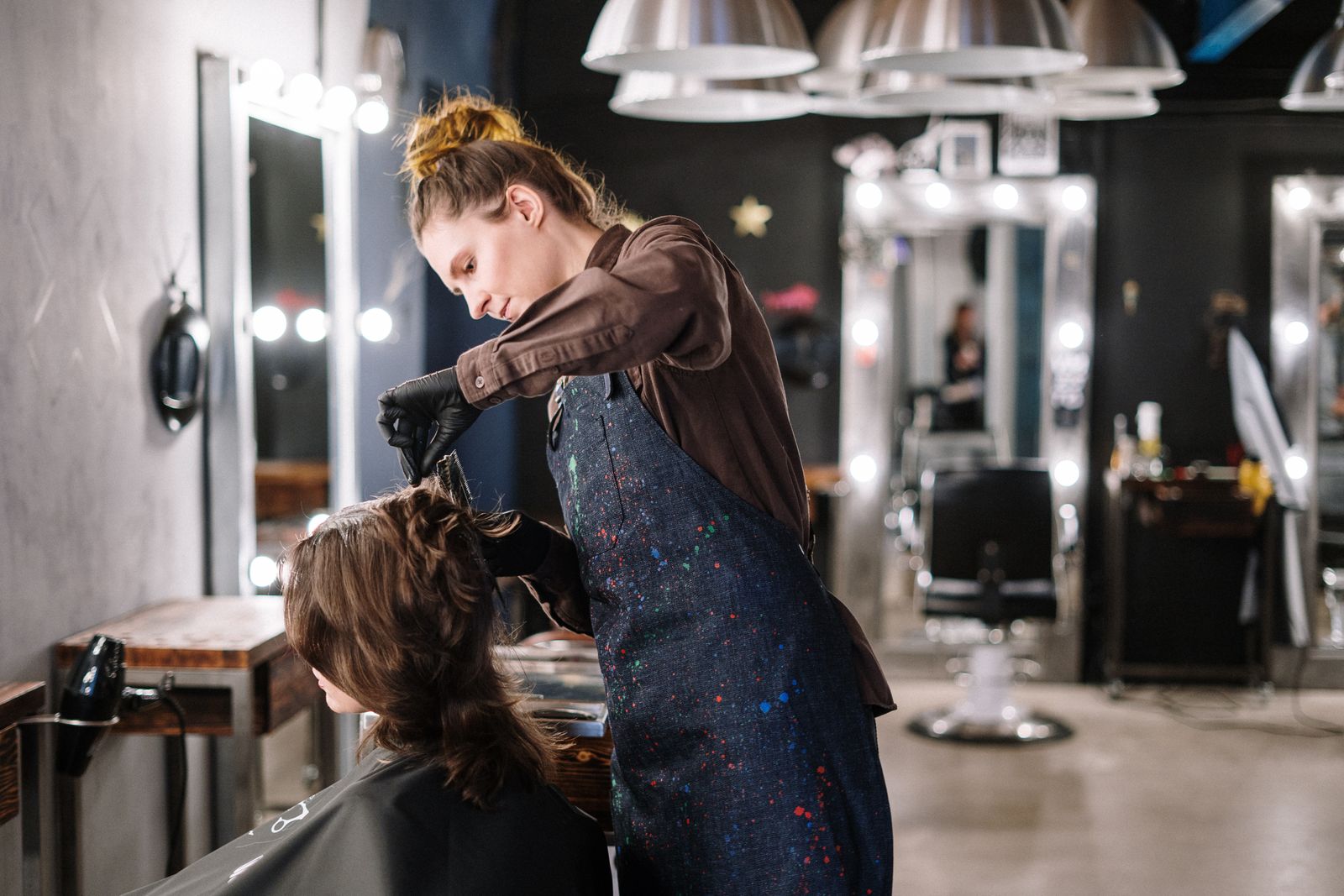
Box dye adds two complications. First, many formulas are designed to work on almost anyone, so they are strong and deposit heavily, especially darker shades layered application over application. Second, some contain metallic salts and other ingredients that react unpredictably with professional lightener and color. The result is not always dramatic — often it is simply uneven, stubborn, or warmer than planned, but a stylist cannot plan around history she does not know exists.
What happens at the appointment, in order
- The history conversation. Expect questions covering the last two to three years: box dye, salon color, bleach, henna, perms, relaxers, and roughly when each happened. Bring dates as best you remember them.
- The strand test. For uncertain histories, the stylist takes a small, hidden section and applies the planned product. This shows how the hair will actually lift and whether it stays strong doing it, before the whole head is committed.
- The plan is set by the test, not the photo. Your target color may be reachable in one visit, or staged across two or more. Banding, darker or warmer stripes where old color sits, is corrected in sequence, usually lightening or removing old pigment first.
- Color is applied in sections, with the oldest hair treated as its own problem. Roots, mid-lengths, and ends often need different formulas or timing because they hold different amounts of old pigment and take color at different rates.
- Processing is watched, not just timed. Hair with layered box dye can shift quickly or stall, so the stylist checks progress rather than trusting a clock. Rinsing may happen in stages.
- Toning and conditioning finish the visit. Freshly lifted hair with a mixed history usually needs a toner to even the tone, and conditioning because lightening over old color is hard on already-processed ends.
What the layers do to lift
Think of each old application as a coat of paint. One layer of dark box dye over natural hair is one problem. Three layers, refreshed at the roots and pulled through the ends each time, is a much thicker coating at the bottom than at the top. Lightener has to work through all of it, which is why ends that were dyed repeatedly lift slowly and warmly while newer growth lifts fast and pale. The banded, brassy results people blame on a bad stylist are often just an honest map of what was on the hair.
How to answer the history question well
Be specific and do not tidy it up. Brand names help if you remember them, shades help, and so does admitting to the black dye phase even if it feels distant, black box dye is the single most consequential thing to disclose. Mention henna especially, since it coats the strand and can react with later chemical services in ways that limit options. At Family Salon and Spa, as at most salons, that history stays a practical planning tool, and clients who give it fully almost always get a better first result.
When the honest answer is to stage it
Sometimes the strand test says the target is not reachable today without damage. That is not a sales tactic. It means the old layers need to be reduced first, the hair conditioned and rested, and the final color built at a second visit. Clients who accept the staged plan end up with the color they wanted and hair that still feels like hair.
Common questions
I dyed my hair two years ago. Does it still matter?
Yes, if that hair is still on your head. Permanent color grows out rather than washing out, so the older lengths still react to new color and lightener.
Why is black box dye such a big deal?
Dark box formulas deposit heavy pigment that lifts slowly and unevenly, often through stubborn warm stages. Removing it is usually a staged process rather than one appointment.
What is a strand test and will it be visible?
It is a small test on a hidden section of hair to preview lift and strength. It is placed where it will not show, and it prevents surprises on the whole head.
Photos in this guide are representative stock images.
← All guides from Family Salon and Spa← Back to Family Salon and Spa