Bangs are the smallest haircut with the largest daily consequences. A few inches of fringe change how your face reads, how your mornings go, and how often you need a trim — and they do it immediately, which is why the decision deserves more than an impulsive photo and a free afternoon in Forest City. The good news is that bangs are also low-commitment in one specific way: they grow, predictably, at about half an inch a month.
This comparison lays out the real options side by side — full, curtain, side-swept, and wispy, then covers the two things people underestimate: the daily upkeep and the grow-out, which is a months-long project with its own stages.
The main styles, compared
| Style | Best suited to | Daily upkeep | Trim rhythm |
|---|---|---|---|
| Full / blunt fringe | Straight or lightly wavy hair, longer and oval faces; makes a strong, deliberate statement | Highest, usually needs a quick blow-dry forward each morning to sit right | Every 3–4 weeks to keep the length off the lashes |
| Curtain bangs | Most face shapes, wavy and straight hair, people who want a softer frame and an easier exit | Moderate, a brief dry with a round brush or roller to keep the parted sweep | Every 5–7 weeks; forgiving as they lengthen |
| Side-swept bangs | Round and square faces, anyone easing into fringe for the first time | Low to moderate, usually behave with a short blow-dry in their direction | Every 4–6 weeks before they start falling into the eyes |
| Wispy / piecey fringe | Fine hair, smaller foreheads, people who want the suggestion of bangs without the weight | Low, light texture means less fighting, though they can look oily sooner | Every 4–5 weeks to keep the piecey shape distinct |
Face shape guides the choice, but hair behavior overrules it. A blunt fringe on hair with a strong cowlick at the hairline will split and fight every single morning, no matter how well it suits the face. Curtain and side-swept styles forgive cowlicks, waves, and imperfect mornings, which is why stylists often steer first-timers there.
Living with them, day to day
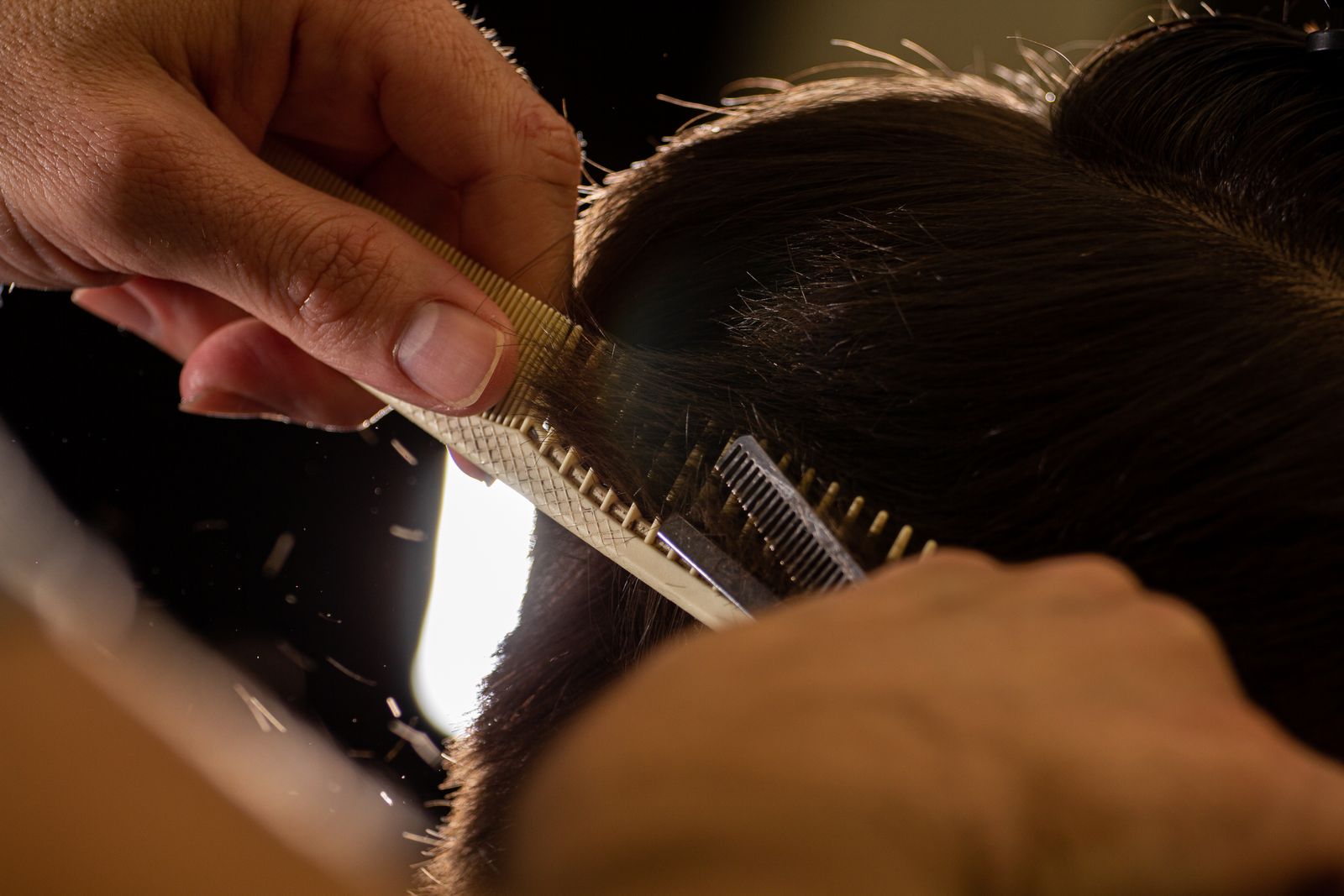
Bangs sit against the forehead, so they pick up skin oil and look greasy before the rest of the hair does. Most bang wearers wash just the fringe in the sink on off days, or use a little dry shampoo at the roots before bed so it absorbs oil overnight. Styling is brief but non-negotiable: bangs dried in the wrong direction while damp will keep that direction all day, so the first five minutes after a wash decide the day.
Weather is the other daily factor. Humidity in a North Carolina summer can wave a straight fringe by noon. A tiny amount of anti-humidity product and realistic expectations help. So does being honest about your mornings: if a three-minute routine every day is not realistic, curtain bangs will make you happier than a blunt fringe.
Growing them out, stage by stage
At half an inch a month, a fringe cut above the brows takes roughly four to six months to reach cheekbone length, where it can blend as face-framing layers, and longer to disappear fully. The awkward stage is real and specific: at eye level, bangs are too long to wear down and too short to tuck. Plan for it rather than being surprised by it.
The workable tools are a center or side part to split the fringe into curtain shape, clips and headbands for the worst weeks, and small reshaping trims that convert bangs into layers instead of simply letting them hang. A stylist at Family Salon and Spa can make the grow-out look intentional at each stage, which is the difference between six months of annoyance and a series of decent haircuts.
The fringe trim in between
Whatever style you choose, expect short, quick fringe trims between full appointments to be part of the deal. Bangs grow into the eyes faster than the rest of a cut grows out of shape, simply because they start closest to them. Trying to stretch a blunt fringe eight weeks is how people end up trimming it themselves over the bathroom sink, sometimes fine, often the start of a correction.
Common questions
Which bangs are lowest maintenance?
Curtain bangs, for most people. They tolerate imperfect styling, grow out gracefully into layers, and need less frequent trims than a blunt fringe.
Can I have bangs with curly hair?
Yes, with a stylist who cuts curls with shrinkage in mind. Curly fringe is cut longer than it looks in the chair, because it springs up as it dries.
How long does growing out bangs really take?
About four to six months to reach a blendable, face-framing length, at roughly half an inch of growth per month. Reshaping trims make the stages look deliberate.
Photos in this guide are representative stock images.
← All guides from Family Salon and Spa← Back to Family Salon and Spa